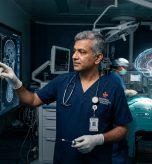

Authored by Dr. Ashok Kumar (MCh Neurosurgery) — Lead Emergency Neuro-Trauma Specialist. A detailed clinical overview on Traumatic Brain Injury (TBI), Glasgow Coma Scale (GCS) assessment, emergency cranial CT protocols, and surgical clot evacuation.
Traumatic Brain Injury (TBI) from road traffic collisions, falls from height, and sports impacts is among the leading causes of acute mortality and lifelong disability in India. The medical concept of the “Golden Hour” underscores that therapeutic and surgical interventions initiated within the first 60 minutes after severe neuro-trauma fundamentally alter patient survival and long-term functional recovery.
1. Classification of Traumatic Brain Injuries
Brain trauma is divided into primary injuries (occurring at the moment of impact) and secondary injuries (evolving over hours to days due to brain edema, ischemia, and intracranial hypertension):
- Epidural Hematoma (EDH): Arterial bleeding (typically the middle meningeal artery) between the skull and dura mater, often associated with a temporal bone fracture. Classically presents with a temporary “lucid interval.”
- Acute Subdural Hematoma (ASDH): Venous rupture of bridging veins between the dura and arachnoid mater. Highly lethal with rapid brain compression.
- Cerebral Contusions & Traumatic SAH: Direct bruising of brain parenchymal tissue, commonly involving frontal and temporal poles against bony ridges.
- Diffuse Axonal Injury (DAI): Rotational shearing of neuronal axons throughout white matter tracts, leading to immediate coma even when initial CT scans appear surprisingly normal.
2. Clinical Severity Grading: The Glasgow Coma Scale (GCS)
The internationally recognized GCS assesses Eye Opening (1-4), Verbal Response (1-5), and Motor Response (1-6):
Concussion, transient confusion, brief amnesia. Requires 24-hour observation and CT scanning if high-risk features exist.
Lethargy, focal neurological signs, prolonged stupor. Immediate ICU admission and urgent cranial imaging required.
Comatose patient. Immediate endotracheal intubation, mechanical ventilation, emergency CT, and rapid surgical readiness.
🚨 Immediate Danger Indicators After Head Trauma
Seek emergency neurosurgical care immediately if the patient shows: loss of consciousness > 1 minute, repeated vomiting (> 2 episodes), unequal or non-reactive pupils (anisocoria), clear fluid leaking from ears or nose (CSF leak), or progressive slurred speech and disorientation.
3. Golden Hour Emergency Protocol: Advanced Trauma Care
Under Dr. Ashok Kumar’s neuro-trauma team, patients arriving with acute head injuries are managed through rapid, synchronized protocols:
1. Resuscitation & Cervical Spine Stabilization (ATLS)
Rigid cervical collar applied immediately. Maintaining mean arterial pressure (MAP > 80 mmHg) and oxygen saturation (SpO2 > 95%) to prevent ischemic secondary brain injury.
2. Rapid High-Speed Multi-Slice Cranial CT Scan
NCCT Brain completed within 20 minutes of arrival, quantifying clot thickness, midline shift (> 5 mm indicates surgical emergency), and compressed basal cisterns.
3. Emergency Craniotomy vs Decompressive Craniectomy
For acute hematomas with mass effect, Dr. Ashok Kumar performs immediate surgical evacuation. When refractory cerebral swelling threatens brainstem herniation, a wide decompressive craniectomy provides vital room for the expanding brain.
4. Frequently Asked Questions (Clinical FAQs)
Q1: Can an injured person be allowed to sleep after a head impact?
Sleep itself is not dangerous, but the patient must be checked and easily awakened every 2 hours during the first 24 hours to verify their cognitive awareness, pupil reaction, and limb strength.
Q2: What is the “Lucid Interval” in an Epidural Hematoma?
A deceptive clinical phenomenon where a patient knocked unconscious momentarily awakens, appears completely alert for minutes to hours, and then rapidly lapses into a deep coma as the arterial bleed expands. This is why any head trauma with loss of consciousness warrants an immediate CT scan.
Q3: What role does neuro-rehabilitation play after traumatic brain injury?
Neuroplasticity allows uninjured brain regions to take over lost functions. Comprehensive post-acute rehabilitation including neuro-physiotherapy, speech therapy, and cognitive retraining significantly accelerates recovery and independent living.
24/7 Emergency Neuro-Trauma Line
Dr. Ashok Kumar and his emergency neurosurgical team are available round-the-clock for acute head trauma, spinal fractures, and emergency neuro-critical admissions.